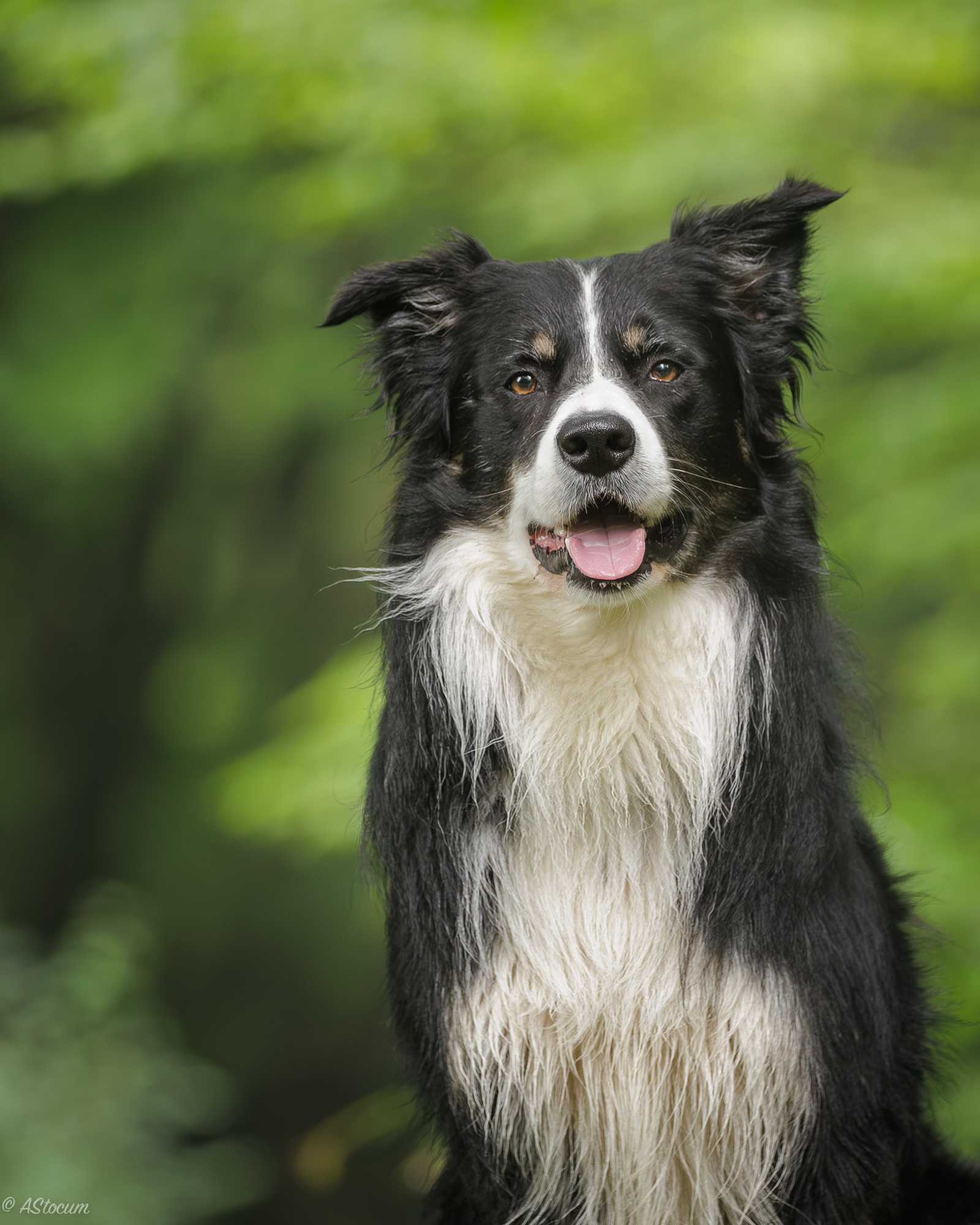
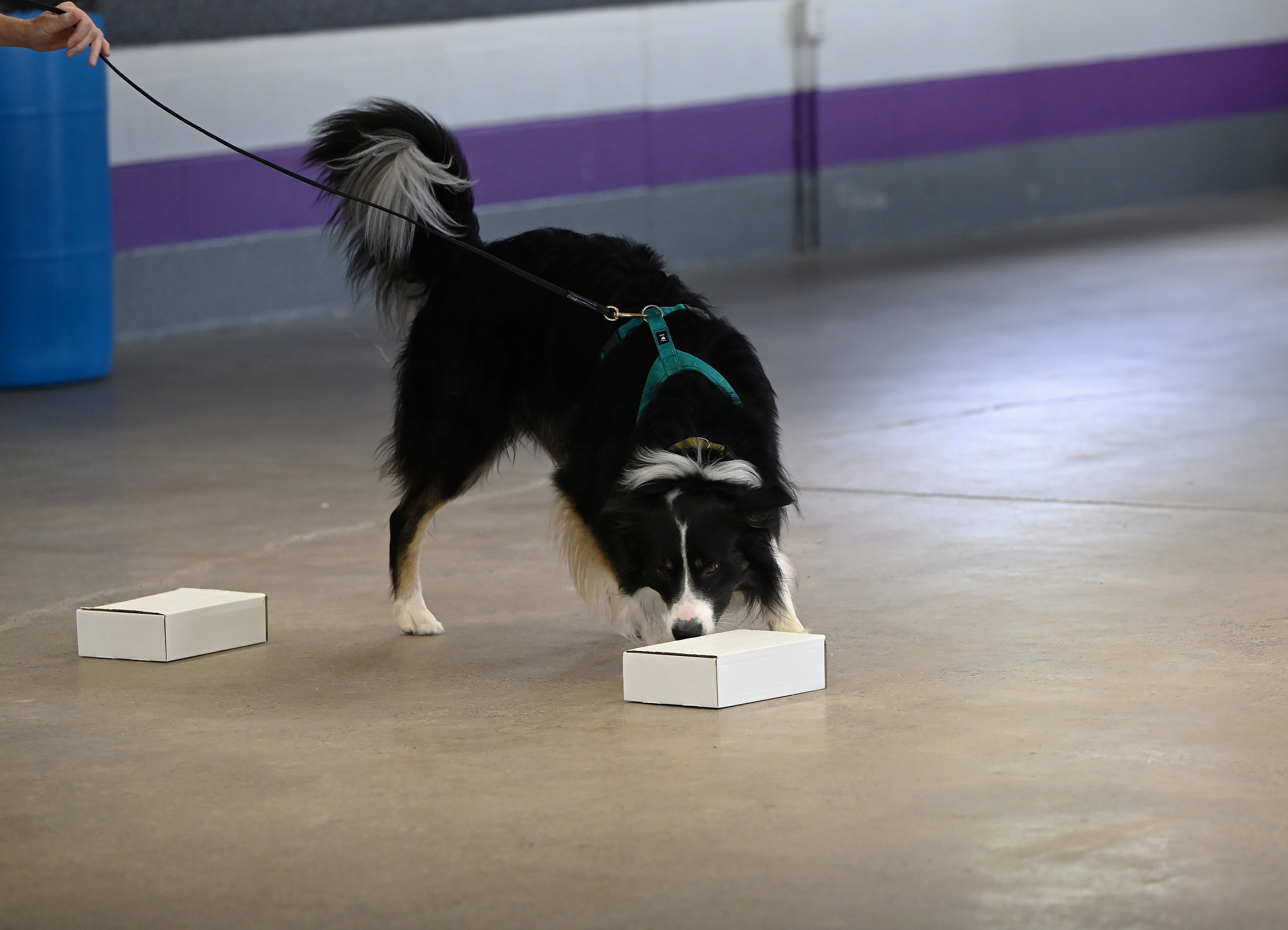
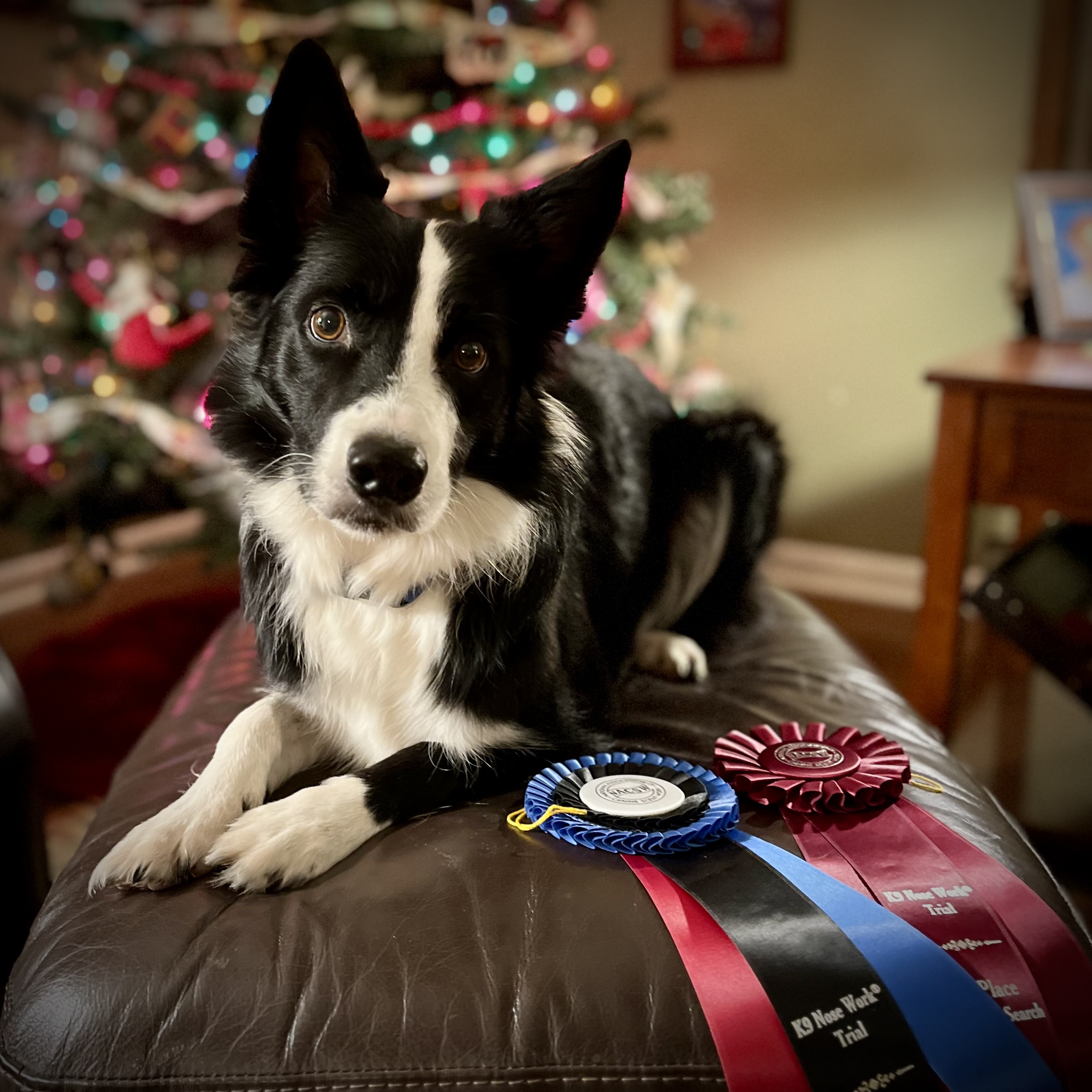
I started Nick’s NW3 journey in 2025, doing a handful of trials and ending our trial season last August with a perfect score and his first NW3 title, as well as all of his element titles**. For a variety of reasons, we didn’t have the opportunity to trial again until late April 2026. That’s when I truly committed to trying for this title. Nick was closing in on 11 yrs old and I felt better prepared, and while I hated the travel that would be necessary, I decided to go for it.
**The NW3-Elite title is part of NACSW’s titling program. Dog and handlers do 6 searches throughout the day with the number of hides unknown and it can vary from 0 (blank) to 3 hides. The total number of hides is usually between 9 to 11. Calling a false alert or missing a hide is an error. A perfect score – no false alerts and all hides found across the 6 searches – results in a NW3 title. One error is allowed to earn a “leg”. Two legs earn a title. Three NW3 titles are required to earn the NW3-Elite title and earn the right to compete in Elite trials.**
I’m gonna be honest, I was nervous at that first 2026 trial and while we started and ended strong, a couple of the searches in the middle didn’t go well and I left feeling discouraged. Especially since we bombed the container search, something that I had always felt I could trust completely. I couldn’t wait to get the last two searches over with and start for home. I was surprised to learn later that we had placed 2nd in those combined interior searches!
But we persevered. And, like magic, I began to **really** trust Nick. Here’s what I texted to my friend and coach, Julie, mid-way through our journey:
“Nick is searching so well!
I feel like I’m just along for the ride.
Hopefully, I don’t fu*k it up.”
In Nosework, it’s easy to say “trust your dog” but in the pressure of a search, there are lots of things that work to erode that feeling. The pressure to be perfect or have only one mistake to get a leg, is real! Weird odor behavior can challenge the dog’s odor puzzle solving ability and our ability to read the dog. Call the hide? Don’t call the hide? Expectations for where the CO might have set the hide, or the number of hides. How about the long waits in the parking lot and the parking lot talk that – positive or negative – can get into our heads.
But somehow, in this journey in the spring of 2026 – across New York, Pennsylvania, New Jersey and Massachusetts – Nick let me know there was no need to be nervous. So I left my nerves behind. I had found that sweet spot of trusting my dog.
I went into the last four trials with only 2 goals: 1) No false alerts. Be patient and let him source the hide. He knows what he’s doing AND 2) Don’t keep him in the search after he starts giving me the signals that nothing else is there. In other words, listen to him.
I feel that I largely accomplished those goals, getting the last four legs we needed (no perfect scores) to earn the NW3-Elite title, our ticket to move onto Elite trials where there is no need to be perfect!
We also made the most of our travels, finding parks and swimming spots whenever possible. We persevered even when the weather turned very hot, my hotel choices weren’t always great, and my air conditioning was on the fritz due to – we found out later – a MOUSE that had gotten into my blower fan. Ewww! It was a fun, hard journey but I’m so glad we did it.
Some may think it’s just a bunch of pretty ribbons but Nick is my special boy and this journey to NW3-Elite helped us make some very special memories together! Congrats to both of us!!
One of the best pieces of advice in dog training is “train the dog in front of you”…because we all know (but do we really?) that all dogs are different, with their own personalities, likes/dislikes, emotional states, learning styles, timelines and maturity levels.
Keen (who just turned 4 yrs old) came after Nick (who just turned 11 yrs old) in my dog journey. Both border collies, both from working lines, and they are even related through Keen’s sire who is a half-brother to Nick. They are really different. Not just in the obvious ways like the fact that Keen is a **really** big boy (56 lbs to Nick’s 36 lbs). Keen is slow twitch to Nick’s fast twitch. Keen thinks while Nick responds. Keen is more confident than Nick in some ways. Keen has big (positive) feelings about every person he meets while Nick only has big feelings about me. They learn differently but I firmly believe they can both get to the same place, if I “train the dog in front of me”.
In April, Keen had his first trial experience in nosework.It was a Level 1 Container Element trial (L1E) and a Level 1 Interior Element trial (L1I).It didn’t go great as I wrote in an earlier blog post. As a result, I pulled him from a NW1 trial I had entered and went to work addressing the issues that were revealed on that trial day.
Back in May, I entered him in a NW1 trial to take place on July 1st. It was only because the trial fell the day after Nick’s NW3 trial that I even took the chance. Although we had been working our “plan”, I wasn’t sure he was ready yet.
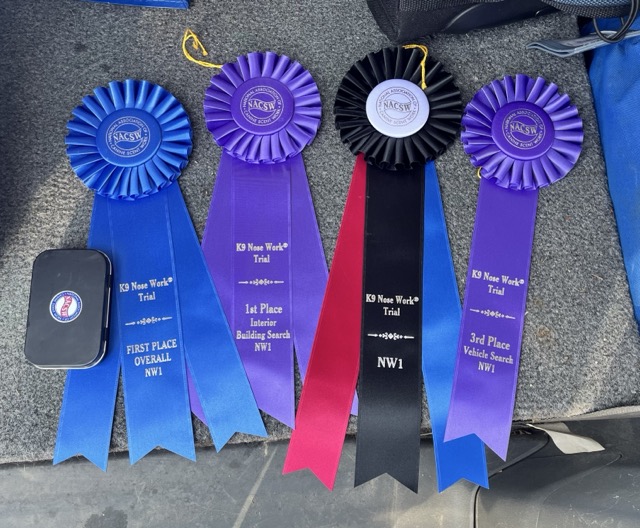
Well, reader, do I have to say that it went well?? Yep, those ribbons all belong to Keen! I am so proud of him and how he stepped up a mere 3 months after clearly feeling overwhelmed in his container trials. I was happy and amazed!
The trial conditions were ideal for us. We had a full day on the site the day before during Nick’s trial, where he could get used to the outdoor environment and seeing people coming and going without feeling like he had to be a Walmart greeter. And the entry to each search was identical so after the first search (exterior), he knew what was coming and why we were there, getting right to work from the start line, earning a couple of placements and 3 “pronounced” designations. I couldn’t have asked for more and when they announced he had taken 1st place overall, you could have knocked me over with a feather.
I’ll enjoy this result for a long while and we’ll keep working together – training and trialing…at our pace. Mostly we’ll keep having fun and enjoy each other – and after all the results are tallied and ribbons displayed, that is the only thing that really matters.
My younger border collie Keen had his first nosework trial experience this past weekend in two Level 1 Element trials (interiors and containers). I have to admit, by most people’s standards it didn’t go great. Out of the 8 searches, he had four “nailed it!” searches -including a four-second threshold hide search! The other four searches didn’t go so well. What did I observe? What did I learn? And how can I take the lessons forward into training?
In the interior searches, we had the option of on/off leash.I chose on-leash for the first two searches since I was worried about his jumping on people.He nailed the Kitchen search (4 seconds!) Then, I had him on leash in the super tight room 107 and that was a mistake as I was distracted by trying to keep the leash untangled and didn’t recognize (til later) that he was in odor at the bottom of the podium. He did great in the music room search – a room that was a bit more open (off-leash); and we had an honest mistake in pooled odor situation on the chair search.
Of the four container searches, he was beautifully successful in two of the searches – the alley (outdoor) and the hallway. His search time doesn’t reflect how quickly he found the hides because he was pulling me a little across the start line at the beginning of each search (LOL).The two he struggled with were the super tight ORT-box container search with three people and 7 boxes crammed into a small space and the open hallway with boxes on the chairs along with loud voices from the atrium below. I could tell he wasn’t “working” in either of these searches so I tried to restart him, but he was just too distracted to focus. (BTW, we have actually worked on containers on chairs in a training scenario, so this was not a new context for him).
I took away a ton of great information from these trials. How does this help us going forward?Well, it seems kind of obvious after some reflection – but it took me a while to get there…
But first, a little about Keen.
Keen is a happy boy and doesn’t take anything too seriously. His training history includes foundation agility taught almost entirely in my backyard and a few trials where he earned his Novice Speedstakes title (he’s a beautiful jumper, btw)…and then…I quit agility. Sorry buddy…it was time. His biggest love is sheep herding where he brings that same joy along with good instincts and a little bit of goofiness. Fortunately for him, he’s been trained by a knowledgeable instructor and it shows. He has “partnered up” with Paul and it gives me a lot of pleasure to watch him do what a border collie was bred to do, and be a useful dog in a farm chore context. Keen is good to the sheep but/and is not a “deep thinker” and doesn’t get offended by fair pressure. It’s no surprise that Paul’s nickname for Keen is “Bubba”. We have no trialing planned. This is the year where my goal is to learn to handle him on sheep. We’ll see. [insert laughing emoji].
Back to Nosework
My older border collie Nick is competing in NW3 and he’s my first dog that I’ve concentrated on scent work training and with whom, I’ve come to enjoy the nuances and challenges of Nosework. In contrast to Keen, Nick came to his first Nosework trial (NW1) with years of agility competition under his belt. And in general, he’s more serious and intense in his work than his nephew Keen. At Nick’s first trial, I called him my “little professional” as he confidently went to each start line, searched without distraction and achieved his title with an overall “pronounced” designation from the judges. As we’ve progressed through the next levels, we’ve had some things to work through – like managing his arousal – and I’m still learning to read his behaviors – but one thing I’m sure about…Nick enjoys Scentwork and brings focus to each search.
Back to Keen and his first trial experience
Keen’s nosework skills and problem-solving are very good. He’s benefited from my experience training Nick, and subsequent growth in my understanding and experience of introducing/practicing various nosework puzzles. In a familiar location or even in a local park he does GREAT and definitely enjoys the game.Why did he struggle at the trial?Three things, I think:
He’s a joyful dog and super-friendly towards people. Think golden-retriever energy. To the point where people are a distraction in Scentwork (never in herding but it was an issue that we worked thru successfully in his few agility trials). Guess what you see at a Nosework trial and in your searches? Lots of people. People close by. Sometimes people talking. We’ve been preparing for this in Nosework classes and have made progress but aren’t “there” yet (Apparently!).
Plus, he’s lacking all the experience a dog like Nick had in his agility career that helped him keep his head together in a variety ofenvironments.
Plus, plus…I won’t let myself off the hook.I was distracted by leash handling in one search and I’m still struggling in general with how to “help”, without taking over if my dog gets stuck – e.g. in odor but not solving the puzzle.
Going forward
So, going forward…I pulled Keen from the NW1 trial we had entered in just a few weeks.Instead, we’ll be concentrating on training in a variety of environments and getting him used to being around people, people who are talking, and people in tight spaces.Pop-ups, Mock trials, class drop-ins, CountryMax, Home Depot…anything to get him used to working around people. Plus, of course, continue to work on his “odor fluency” with lots of puzzles to solve.
It’s really so simple, when I think about it!And there is no rush or timetable to adhere to…he is only three years old (soon to be four) and this is supposed to be fun! Onward!
Yesterday, I brought my camera along on our little hike HOPING to get a shot like this…making up for all the times I didn’t bring my camera to this very place and wished I had. 😊 Here are my reasons for giving in to the “not today” excuse in the recent past: It’s about a half-mile in and mostly uphill to get to this spot. It’s winter, it’s cold. I’m going to be wearing a bulky jacket with a hood which reduces my mobility and makes it awkward to shoot. I’ll be wearing gloves AND wool mittens because my hands get so cold. The camera/lens combo is heavy AND expensive so I’ll have to get it ready to secure on our drive, and feel reasonably confident I’m going to stay upright while trekking across the snow (actually a valid concern!).
As James Clear says…”Before you try to increase your willpower, try to decrease the friction in your environment.”.🥰. So here goes: 1) I purchased a heated vest so I can wear lighter clothes and have more mobility 2) I use hand-warmers so I can ditch the mittens and be ready to shoot. 3) Over the last month, I’ve hit the home gym to work on upper body strength so slinging the camera body and a heavy Canon 100-400mm lens over my shoulder while hiking feel less daunting (for those youngsters out there, as you get older its an uphill battle to keep in shape to do the things you love to do) 4) I have my camera kit set up and ready to go5) I use my new messenger-style camera bag (xmas present from my daughter) to slip in and secure the camera plus lens while driving, so I can just grab the camera and go when we arrive at our hiking spot.
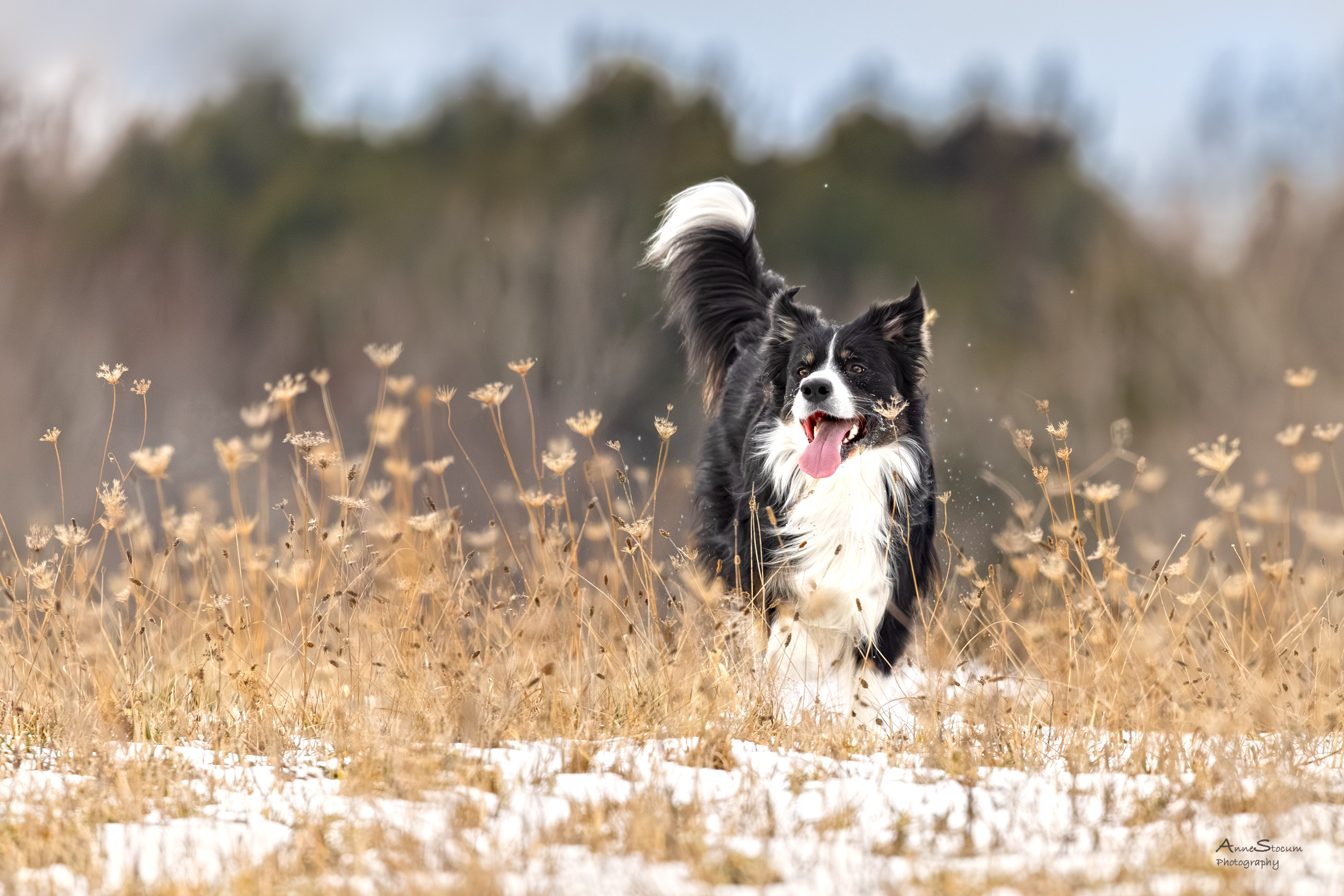
I love this shot.It captures a really fun moment in the life of Keen – his joy, eagerness, handsomeness.The muted tones of the weeds (Queen Anne’s Lace) add color and texture to the winter landscape as do the background trees. It’s composed well – that is no small thing considering I generally just let the dogs play and run around on our hikes while I try to compose and shoot.
I try to live by a “never give up” philosophy and a problem solving mentality…which reminds me. I wrote an article about this in the context of dog training in 2017…Check it out. I still believe every word!https://annestocumdogtraining.com/?s=solution+focus
How I eliminated barking from my dog’s searching to create a relaxed, confident working dog.
I’ve been involved in Nosework (NACSW style) for about 5 yrs. I started training my border collie Tai at age 10, shortly after his agility retirement. My only goal was to do something fun with him as he got older. I had no expectation or real desire to compete (we had competed a LOT in agility), but we did a little. Tai passed his ORT in one go; and earned his NW1 and three level 1 element titles.We only competed once in NW2 before I retired him for health reasons at 12-1/2 years old.
And Then Their Was Nick
About the time Tai retired from Nosework, I started Nick. He is a border collie, who came to Nosework at age 6 yrs after a serious injury that led to an early retirement in Agility.If you know Nick…you know he is a high drive, easily aroused bundle of energy!From the beginning of his Nosework training, Nick would allow that arousal to lead to barking – nearly always at the start of a search; and often when moving from one hide to another. He sometimes barked while searching, seemingly out of frustration, when not finding the hide quickly enough. Here is a good example of the barking issues in a search from March 2, 2024.
Nick was successful in this specific search, but was he searching as well as he could? Obviously not. I only included one example video because it was a very consistent behavior.I doubt I could find a video when he didn’t bark at least once, particularly as he left the start line.
Nick exhibited the barking early in his Nosework training. I didn’t like the barking and wanted to get rid of it. With my instructor’s help, I tried to lower his arousal with calmness and food at the start of the search.But honestly, it wasn’t working, so I just decided to live with it (not knowing what else to do). Despite the barking, I felt like he was growing his skill set and gaining confidence.
With the barking problem unsolved, Nick passed his ORT in Dec 2022 (2 attempts…due to arousal in first attempt) and his NW1 title in April 2023 (one attempt, overall pronounced). Then, we attempted FOUR NW2 titles between June 2023 and May 2024! Ugh, it was hard to fail that many times!! Each had only one little mistake along with many pronounced searches and placements.We had potential!
Was the barking and the mindset it created in Nick getting in our way?
The “Holly” Challenge
That brings us to August, 2024 when I met Holly Bushard…an accomplished competitor, instructor and trial official in Nosework. Holly came to Savvy Dog Sports to give a series of workshops. We had a working spot in one of the sessions and she spotted the “barking” problem immediately.In addition to all the other great information I gained at this workshop, Holly challenged me. She said something to the effect…”if this were my dog, I would get rid of the barking”. That got me thinking…
No Reward Markers
An important concept that Holly demonstrated in one of the workshops was the utility of “no reward markers” (NRMs) in Nosework training. A NRM communicates to the dog that the behavior he is exhibiting will not earn a reward.It’s a clear communication to the dog –“that’s not it… try something else.” Holly demonstrated their use in situations where a dog stopped searching and became obsessed with a distractor. The NRM marker was used to communicate to the dog – “that is not going to earn a reward, try again”.
I’m quite familiar with the use of NRMs…I use them in agility training, for example, when training discrete behaviors like weave entries, or verbal-only obstacle discriminations.I use them in herding when teaching off-balance flanks (don’t worry if you don’t understand that – it took me years!).But I have never used them in Nosework.
Since Nick had a history and understanding of NRMs from our previous training, I set about making a plan to extinguish his barking in Nosework using this technique!After all, if he is barking he’s not working and it was definitely worth a try.
The Goal
“Nick will do all his searches quietly and calmly, even when being rewarded with a tug-toy – his highest value reward.”
The Plan
Use NRM’s to teach Nick if he barks, the consequence will be that we stop searching, we pause (timeout) and then start again.My NRM is “Nope”, or “No”.
Start this training with very simple foundation-level searches. As he is successful increase the challenges.
Increase his probability of success by instituting a controlled approach to the start-line. Start him from a bed and use “cookie to nose” to move him to the start-line to lessen the probability of his barking on the way to the start line.Pause at the start line before asking for the search. This had an important additional benefit of improving his start-line focus.
Challenge Progression
Hot tin thrown ahead into grass
Colander “Search” – a more visible container
Hot tin placed in the grass
Three container searches (shell game type searches)
Sock Searches – one hide
Sock Searches – two hides
Sock Searches – two hides with tugging as a reward
White Box Container Searches – with and without distractors*
Metal Box Container Searches with Multiple Distractors*
Take it on the road – at class and other novel areas
*Nick is well schooled in searching around distractors so I didn’t think this would be a problem.
Execution of the Plan
Session 1:
Below is the full video of our first session on Aug 28, 2024 that included steps 1 to 4.It took some reps to get the mechanics right and I quickly learned that throwing a box into the grass was just increasing his arousal so I switched to a visible object (colander).The entire session is about 8 minutes long…As you can see his error rate was high at the beginning but once he had an understanding he settled and did very well. In this session, I learned the value of being quiet.It seemed to work best for him if I spoke very softly when cueing “Find it” or “Find another” and said nothing else during the search except marking the hide.
Session 2: We did the step 5 search on August 30, 2024 (Sock searches – one hide). I recorded every session so I could track his error rate.I wanted there to be a good balance of success and failure since that is how learning happens.
Results of Session 2 (Step 5):
Rep 1 – NRM off the start line.
Rep 2 – ok
Rep 3 – NRM off the start line
Rep 4 through 9 – ok.After Rep 9, I added “tugging” after the “Finish” cue.
Rep 10 – NRM off the start line
Rep 11 and 12 – ok with a little tugging after Finish cue
Rep 13 – ok!
Sessions 3-5: Our third session on September 2, 2024 covered steps 6 & 7, introducing multiple hides and tugging.I’ve included that video below.
From there, I did two sessions on Sept 8th…using White Boxes (step 8) and another container search using three hot tins with cold tins and distractor tins (step 9). In each of these sessions, he had a very low error rate. He was really getting it.
Novel Area Search: Our next test was a search in a novel area.Fortunately, we had a class scheduled on September 12, 2024 at a local high school. I brought my bed with us to be able to set the context for “no barking”.The video below was our second search of the day.As you will see, he searched very nicely and was relaxed and successful with no barking.
Overall, Nick did fantastic in all our searches that day.His first three searches were perfect. In the 4th search, he needed one “no barking” reminder at the start line of the 4 hide search. In that same search, he also needed a reminder after finding 3 of the 4 hides, when I cued him to “find another”.The last hide was hard for him but after the reminder he worked in a relaxed manner with no barking. We let him keep going until finding the 4th hide. The total search lasted over 6 minutes.
Since September 12th, we’ve participated in classes and done our own training.I’ve had to give him very few reminders…literally one or two. Here is a compilation of a few searches from November – I was feeling very good about his progress.
The Ultimate Test
The ultimate test would be a trial. That happened at a NW2 trial on Dec 7th, 2024. I was ready to remind him of our new “no barking” rule even in this trial situation but it wasn’t necessary at all. Not only did Nick achieve his NW2 title, he earned a first place in containers and a pronounced designation in 4/5 searches. I was so pleased that there was NO BARKING and he was nicely focused at each start line! It was a pleasure to be able to reward each search with his favorite tugging game.
Wrap-Up
I can say with confidence that I’ve eliminated Nick’s barking in Nosework.Even better, by eliminating the barking, Nick is more relaxed and confident in his searching, making the whole experience more enjoyable for both of us. We also now have a focused start line routine. All thanks to Holly’s challenge, the use of No Reward Markers — and a smart, biddable boy!
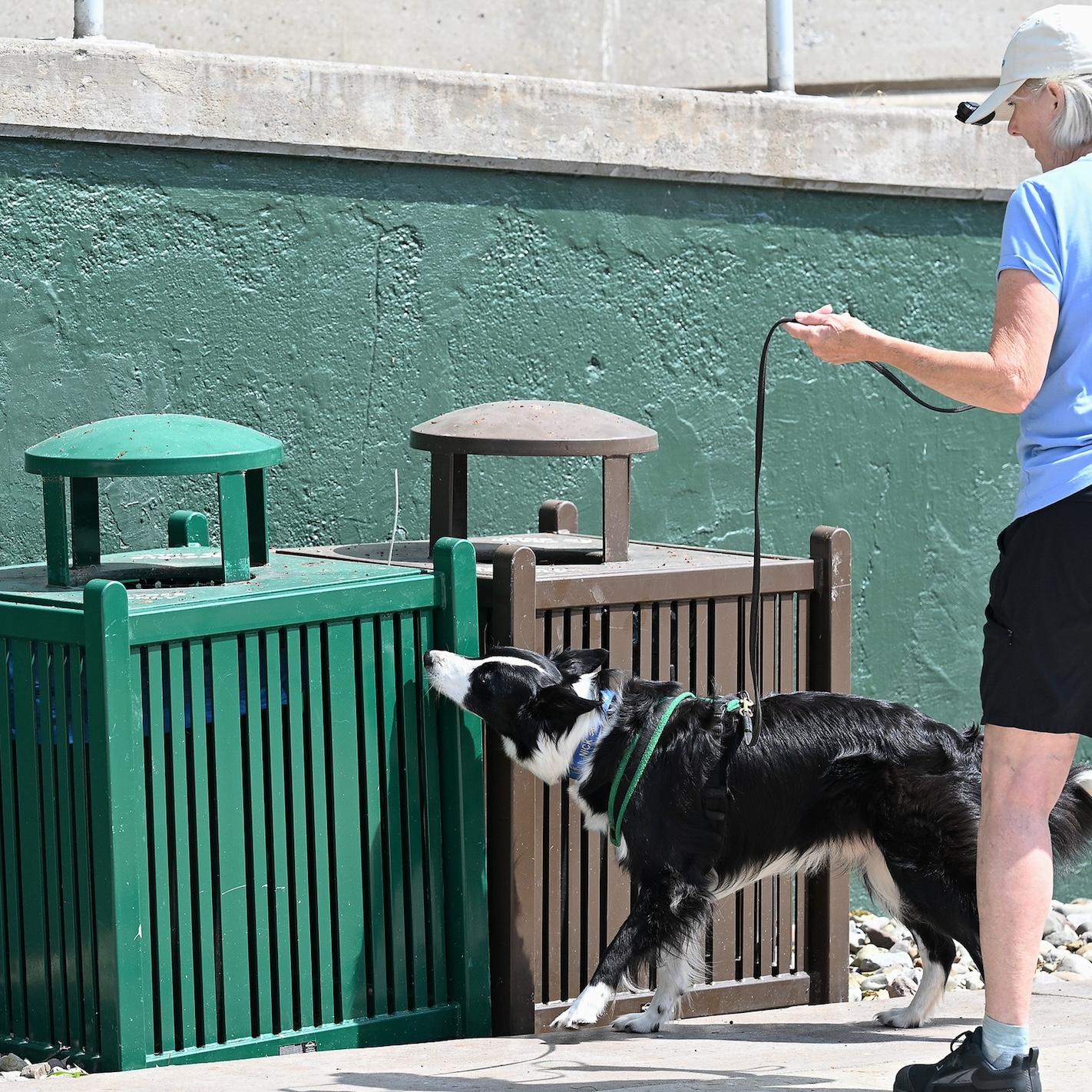 I started Nick’s NW3 journey in 2025, doing a handful of trials and ending our trial season last August with a perfect score and his first NW3 title, as well as all of his element titles**. For a variety of reasons, we didn’t have the opportunity to trial again until late April 2026. That’s when I truly committed to trying for this title. Nick was closing in on 11 yrs old and I felt better prepared, and while I hated the travel that would be necessary, I decided to go for it.